

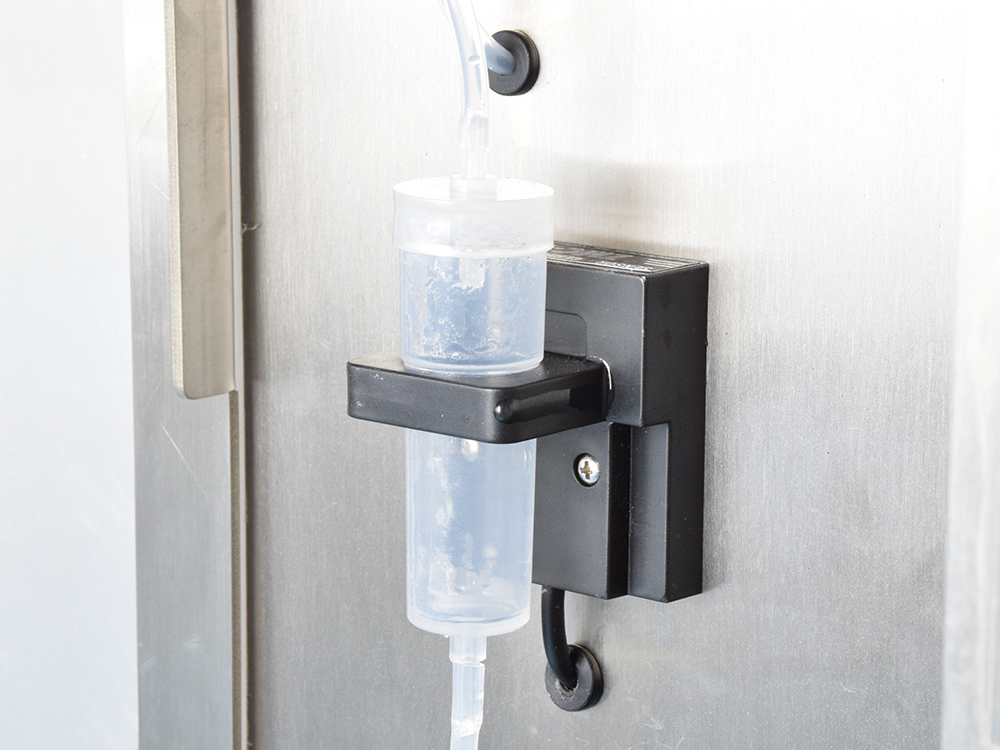
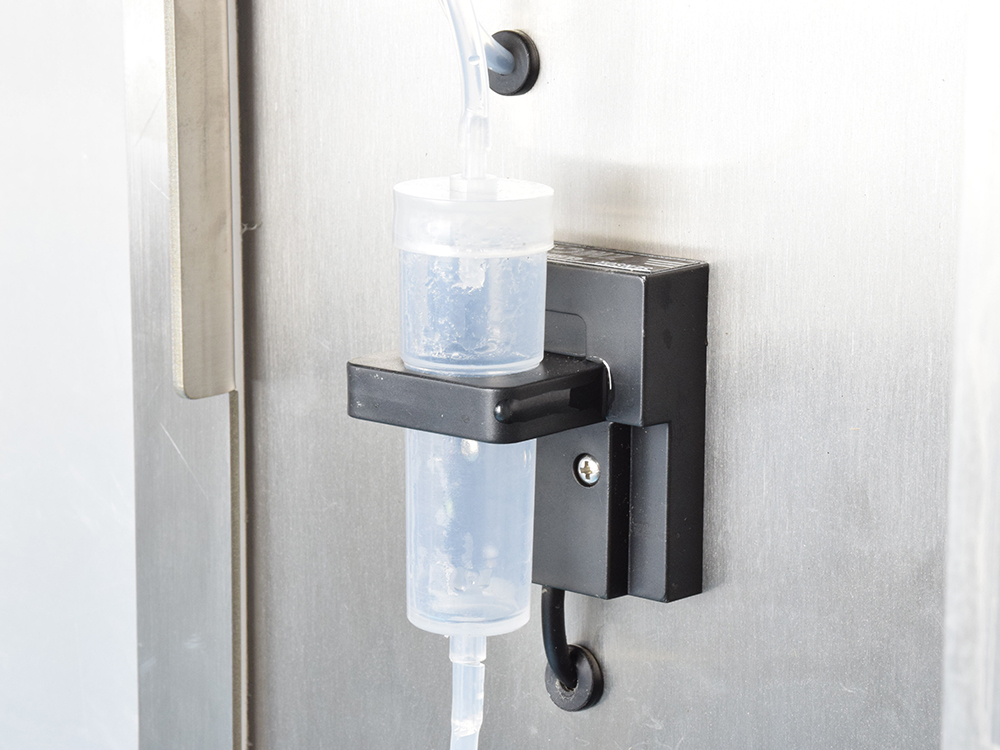
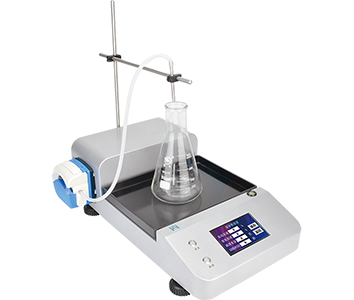
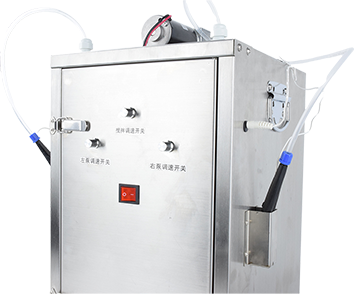
The drip sensor monitors the dripping status of the sizing agent in real time (including normal dripping, liquid cutoff, and liquid overflow), and links with the control system to realize automatic early warning or adjustment, so as to prevent under-oiling or over-oiling of yarns caused by abnormal sizing agent supply. It adopts a photoelectric sensor (capacitive sensor is used in some applications), which consists of an emitting unit and a receiving unit. The sensor is installed beside the oil guide tube between the outlet of the liquid storage container and the oil tank (as shown by the black component below the liquid storage bottle in Figure 1, equipped with red/green indicator lights). The sensor forms a detection light path / electric field covering the dripping area inside the oil guide tube.
20-220 drops/min
Adaptive Grating Sensor
Less than 1 in 100,000
Share:
In the titration-mode glass fiber external coating system, the drip sensor is the core monitoring component that guarantees a stable supply of sizing agent.
It usually adopts a photoelectric sensor (capacitive sensor in some scenarios), consisting of an emitter and a receiver. The sensor is installed beside the oil guide tube between the outlet of the liquid storage container and the oil tank (as shown by the black component below the liquid storage bottle in Figure 1, equipped with red/green indicator lights). The sensor generates a detection light path / electric field covering the dripping zone inside the oil guide tube.
If the dripping frequency is lower than the preset threshold (e.g., the peristaltic pump is set to 10 drops/min but the actual rate is < 5 drops/min), it is judged as liquid cutoff. If the dripping frequency is excessively high or the light path is continuously blocked, it is judged as liquid overflow or pipeline blockage.
High-precision detection: Capable of identifying droplets with a diameter ≥ 0.5 mm and a response time < 100 ms, adapting to the high-speed glass fiber drawing production rhythm (drawing speed usually > 1000 m/min).
Linked control: Upon detecting an abnormality, the sensor triggers an audible and visual alarm on the equipment (red light on as shown in Figure 1) and sends a signal to the peristaltic pump simultaneously (e.g., increasing pump speed during liquid cutoff and reducing pump speed during liquid overflow) to realize closed-loop regulation.
Strong adaptability: Compatible with sizing agents of different viscosities (viscosity range: 50–500 mPa·s). Misjudgment caused by changes in sizing agent viscosity can be avoided by adjusting the sensitivity threshold of the sensor.
Non-contact monitoring: No contact with the sizing agent is required, preventing contamination of the auxiliary agent or sensor damage due to corrosion, with a service life of up to 1–2 years.
In the titration-mode glass fiber external coating system, the drip sensor is the core monitoring component that guarantees a stable supply of sizing agent.
It monitors the dripping state of the sizing agent in real time (normal dripping, liquid cutoff or liquid overflow), and interacts with the control system to provide automatic early warning or adjustment, preventing yarn under-oiling or over-oiling caused by abnormal sizing agent supply.
It usually adopts a photoelectric sensor (capacitive sensor in some scenarios), consisting of an emitter and a receiver. The sensor is installed beside the oil guide tube between the outlet of the liquid storage container and the oil tank (as shown by the black component below the liquid storage bottle in Figure 1, equipped with red/green indicator lights). The sensor generates a detection light path / electric field covering the dripping zone inside the oil guide tube.
When the sizing agent drips normally, droplets block the light path of the photoelectric sensor (or change the capacitance value). Each blockage detected by the sensor is recorded as one droplet.
If the dripping frequency is lower than the preset threshold (e.g., the peristaltic pump is set to 10 drops/min but the actual rate is < 5 drops/min), it is judged as liquid cutoff. If the dripping frequency is excessively high or the light path is continuously blocked, it is judged as liquid overflow or pipeline blockage.
High-precision detection: Capable of identifying droplets with a diameter ≥ 0.5 mm and a response time < 100 ms, adapting to the high-speed glass fiber drawing production rhythm (drawing speed usually > 1000 m/min).
Linked control: Upon detecting an abnormality, the sensor triggers an audible and visual alarm on the equipment (red light on as shown in Figure 1) and sends a signal to the peristaltic pump simultaneously (e.g., increasing pump speed during liquid cutoff and reducing pump speed during liquid overflow) to realize closed-loop regulation.
Strong adaptability: Compatible with sizing agents of different viscosities (viscosity range: 50–500 mPa·s). Misjudgment caused by changes in sizing agent viscosity can be avoided by adjusting the sensitivity threshold of the sensor.
Non-contact monitoring: No contact with the sizing agent is required, preventing contamination of the auxiliary agent or sensor damage due to corrosion, with a service life of up to 1–2 years.
We pride ourselves on customer service and are committed to providing five-star support. If you have any questions about our products, please feel free to call or send an email to us.
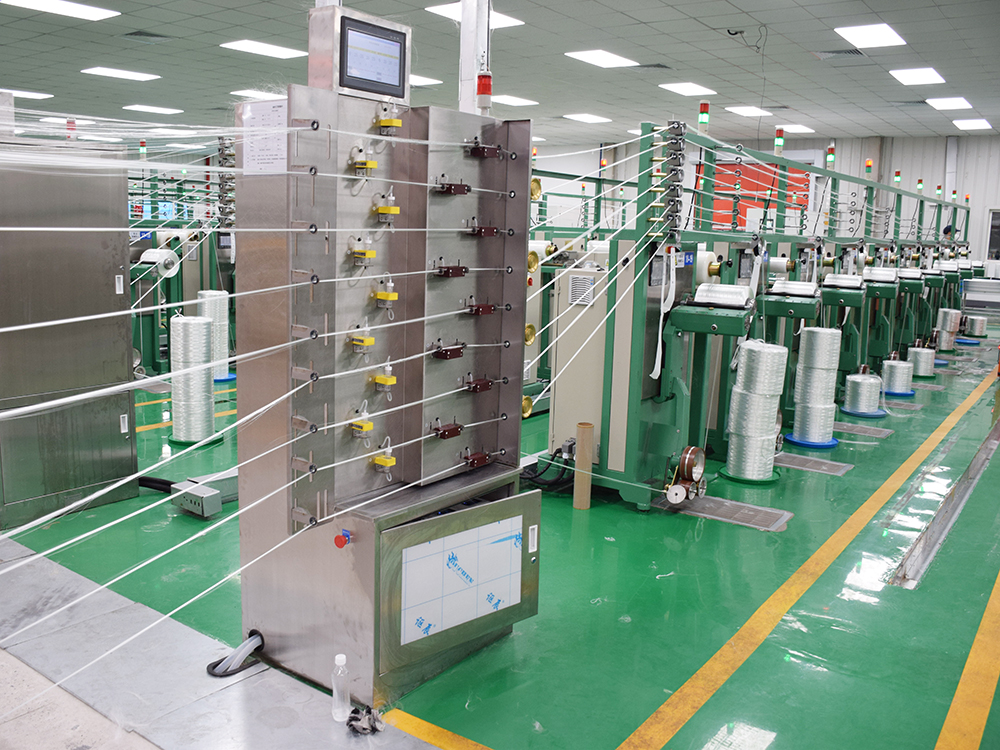
Oiling Accuracy±1%
Number of Channels1-9 Channels
Application MethodOiling Tank / Spraying
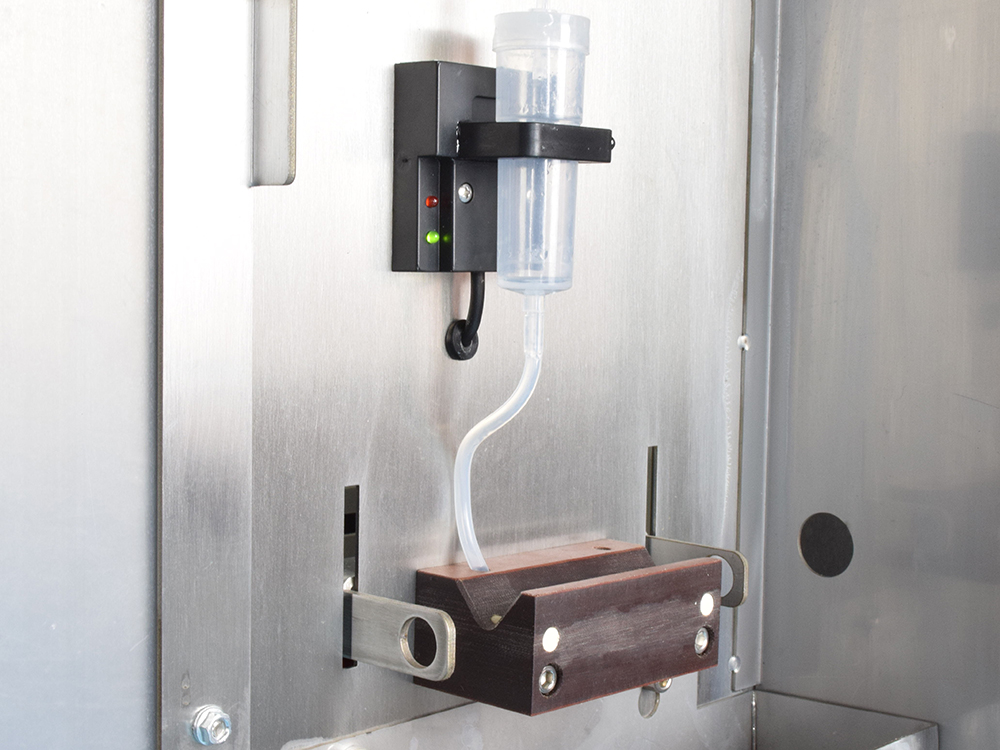
Application MethodTitration
Titration Range20-220 drops/min
Pressure0.2Mpa
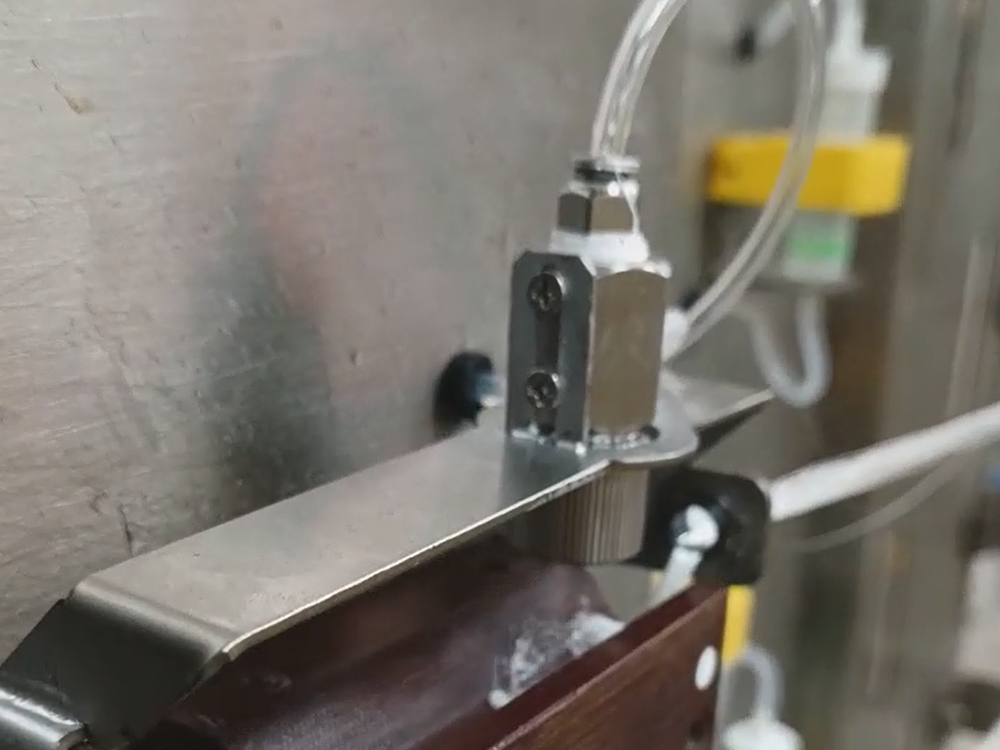
Coating MethodSpraying
Flow Range<38ml/min
Pressure0.2-0.5Mpa
Drip Range20-220 drops/min
Flow MonitoringAdaptive Grating Sensor
False Detection RateLess than 1 in 100,000

Professional Integrator of Automated Liquid Handling System Equipment
Room 108, 1st Floor, Building 3, 666 Songhuang Road, Qingpu District, Shanghai
1st Floor, Building A, Chuangye Center No. 295 Jingxiu Street, Jingxiu District Baoding City, Hebei Province, China




 English
 简体中文
简体中文